Political fiction from David Lytel
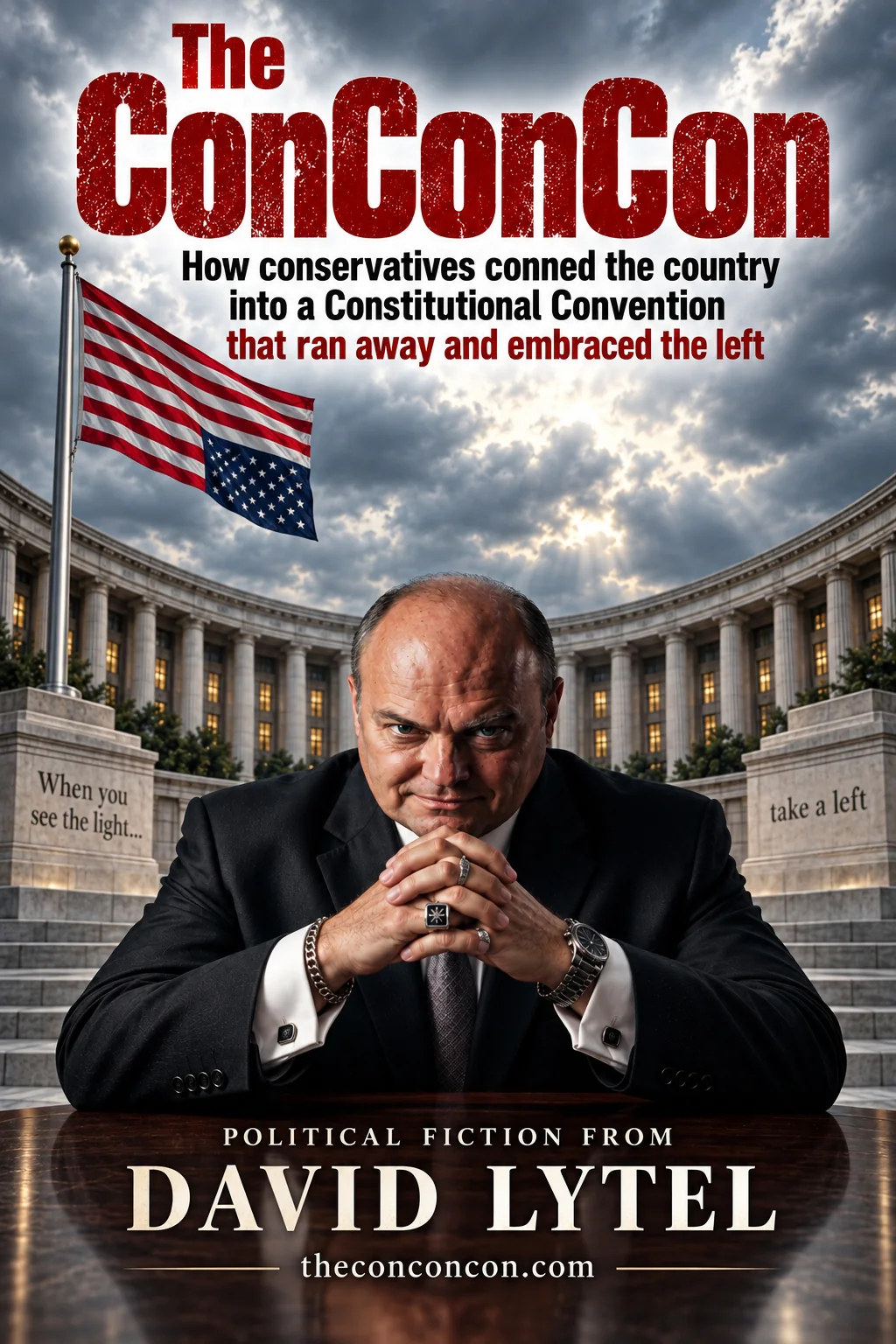
TheConConCon
How conservatives conned the country into a Constitutional Convention that ran away and embraced the left.

Say it three times
Con, Con, Con: what the title means
- 1 nounA confidence trick. A swindle sold with a smile and a flag pin.
- 2 short forConstitutional. As in the document every side swears it loves.
- 3 short forConvention. As in the one no one has dared to call since 1787.
Put them together and you have the plot.
A nation. A con. A convention no one saw coming.
The novel
A power grab that gets away from the people who planned it.
When a group of conservative strategists manipulate public fear and distrust, they succeed in pushing the United States toward a Constitutional Convention. But what begins as a power grab to enshrine right wing power spirals out of control, taking an unexpected turn that no one could have predicted.
The ConConCon is a sharp, timely and thought provoking political novel that explores power, deception, and the unintended consequences of playing with the Constitution.

A gripping and darkly plausible look at how easily truth can be manipulated in the age of conspiracy and ideology.
Provocative, timely, and impossible to put down.
Inside the covers
What you'll find inside
Five things waiting between the covers, for readers who like their politics sharp and their plots impossible to predict.
 01 / 05
The con
Strategists on the right sell a frightened country a cure: rewrite the Constitution. Fear and distrust do the rest.
- 02 / 05
A runaway convention
Once the delegates are seated, nobody controls the room. Not even the people who called it to order.
 03 / 05
A man named Moze
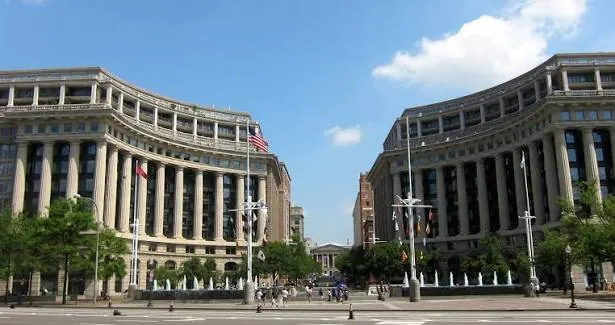
A well dressed centrist with a quick mind and a habit of landing on his feet, pulled out of the back room and onto the stage.
 04 / 05
The left walks in
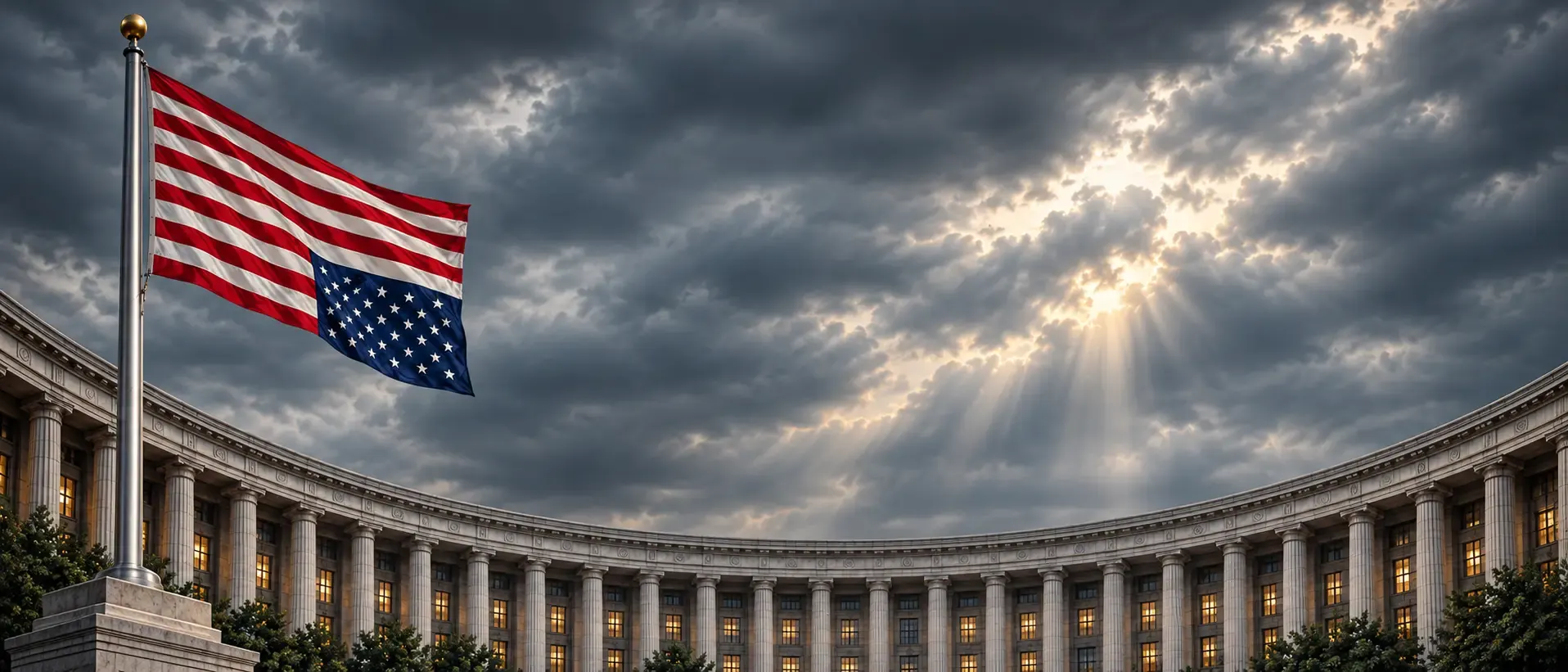
When the right walks out, a resurgent left fills the void, armed with ideas cable news has never heard spoken aloud.
 05 / 05
The consequences
A sharp, timely and thought provoking look at power, deception and the unintended consequences of playing with the Constitution.
The plot, roughly
The long con
From a back room scheme to a brand new constitution, one chapter at a time.
The Constitutional Coup
The scheme
A plan takes shape on the right: stop fighting over laws and change the rules themselves.
Go Down Moses
Meet Moze
Who is Moze Hernandez, and how did a political consultant end up at the center of it all?
Conspiracy Entrepreneurs · The Con behind the ConCon
Selling the lie
How the right dealt itself an unfair advantage, and the bold lies that fooled a country into a convention.
An Away Game · Fire the Client
Moze steps up
A consultant becomes a leader, and launches his own campaign to win convention delegates.
MAGNA · Civil Debate
The country argues
The right mobilizes to win while the whole society debates whether a ConCon is a cure or a catastrophe.
First Tuesday · Spin Cycle
Delegates elected
Election day for the convention. Then the spin, as every side explains why it really won.
Bloc Parties · Floor Fights
The floor erupts
The Convention convenes with the Supreme Court's blessing. The right walks out, and the left fills the void.
Tip My Hat to the New Constitution
A new draft
A finished constitution, and a ratification campaign to sell it to the states.
And then...
No one saw it coming
From ratification to the race for the White House, the last chapters belong to the reader. No spoilers here.
Credentials, please
Meet the cast
The people pulling the strings, and the ones pulling back. Pick up a pass to meet them properly.





The real ConCon
34 to call it. 38 to ratify it.
Article V lets two thirds of the states force a convention to propose amendments to the Constitution. Three fourths of them must ratify whatever it writes.
It has never been done. The ConConCon imagines what happens when it is.
Take a look inside
Open the book
From Chapter 4, Moze's Foil and a Resurgent Left: a fundraiser, a borrowed suit, and the night the campaign stopped being a lark.
Loading the pages...
Tap a page, swipe, or use the arrow keys to turn.
An excerpt from
The
ConConCon
Chapter 4
Moze's Foil and a Resurgent Left
Political fiction
The ConConCon
How conservatives conned the country into a Constitutional Convention that ran away and embraced the left
David Lytel
From Chapter 4Casa Carlos
The fundraiser that launched the Constitutional Convention campaign outdid itself relative to what had come before. So many people RSVP’d they had to set up tents in the backyard as if they were holding an outdoor wedding.
Moze treated the house staff and caterers politely but his friendships and allegiances lay with the landscaping crew. These were, quite literally, his people and there was genuine affection. He had a frustrated compulsion from somewhere to work outdoors, with his hands, and they in turn were proud that he had climbed so far in White America. It was a low-key mutual admiration society.
In the final moments of preparation for this crucial fundraiser in the grand ballroom Moze frantically searched for just the right suit for this occasion. The color would flatter the maiden of honor, a very wealthy woman who could fund the whole of the ConCon campaign if she were so inclined. She was fashionable. Brilliant colors were her brand. Moze had just the right suit that would deftly demonstrate his affection for her. He ripped up his closets looking and couldn’t find it.
Madeleine, seeing him in distress, quietly suggested it might still be with all his other seldom-worn stuff in the old house, still not yet cleaned out or sold. He wasn’t holding onto the house as an escape; he had just been too busy to deal with the movers who were going to empty it and the realtor tasked with unloading it.
He looked at the clock, leapt down the stairs and grabbed his keys. She yelled after him that there would be no possible way to get there and back before his fundraising mark and her entourage arrived. It was late afternoon and while most of the landscaping crew had quit the supervisor, Carlos, and a few of the guys were still working. Moze ran out the backdoor to catch Carlos before he left. Seeing the boss man running at him startled Carlos, who nonetheless kept his cool. He was about Moze’s height, same dark hair and eyes of the Aztecs, Mayas and Incas and Mexican culture’s other indigenous civilizations. While most of the crew had mustaches or beards Carlos, like Moze, was clean shaven.
Moze asked with great obsequiousness if Carlos would run to the old house to pick up a suit he needed for tonight, one that would help him ingratiate himself with his guests. Carlos readily agreed and Moze threw him the keys, inviting him to take his car and travel in style. Carlos started to object then thought better of it since time was of the essence.
Moze went back upstairs to prepare and Carlos drove into the city. He parked in front, let himself in, and found the spare suits just where he was told they would be. He might have been in the house ten minutes, top.
But it was the wrong ten minutes. A car full of murderous thugs had the place under surveillance and all they had to do was detonate the device they had placed and watch it catch fire and collapse. Convinced they had accomplished their job they drove away slowly in the opposite direction.
The fire crews dragged a lifeless body from the rubble and, seeing Moze’s car out in front, the neighbors concluded Moze had been killed. The initial press reports also said Moze was dead. He put on an alternative suit just in case Carlos wasn’t back on time. In an instant everyone’s cell phone blew up: Madeleine’s, the agency staff, the caterers, the first of the guests to arrive, a cacophony of ring tones The Washington Post was reporting that Moze had been killed in an explosion at his home. Most who received the news in this way were shocked and confused, since Moze was right there with them. Only Moze and Madeleine knew what had happened. Moze collapsed. He was inconsolable. In the end he made just a brief appearance at the fundraiser. He had inadvertently sent Carlos to his death and the searing guilt would be with him forever.
The death of Carlos was the principal point of inflection in Moze’s emerging public life. It had seemed a lark at first to be able to speak his own words with his own voice, to talk back in whatever manner he wanted to. Now, however, the target on his back was never again merely rhetorical. His public life could end in an instant and he would have to prepare for this new reality. There was little evidence to analyze but it was incontrovertibly true that whoever did it wanted Moze dead. There could be no doubt that the motivation behind it was to cripple or kill the ConCon campaign. Who else other than the far right fascist coalition wanted him dead and would be prepared to go through with it?
He hired a security team. He wanted to hunker down in Potomac but they urged him to get a hotel room across the street from the agency’s offices, reducing his daily commute to a walk across the street. The murder of Carlos also woke up Moze’s partners. They had put up with him using the agency’s office as his de facto campaign headquarters for too long, he needed to decamp to somewhere else. His top lieutenants took the matter in hand and in short order found a building in SE. New York Avenue was a world away from K Street but there was a metro stop.
Once it was leased and insured they had their first meeting on site, nothing to furnish the place but some folding chairs. The volunteers had the choice of volunteering on the campaign or volunteering on the renovation of the building, which was going to require some gussying up. With blistering speed an architect designed a functioning interior for a campaign office and a construction firm hired to execute the plan. Not three weeks after Carlos’s funeral the campaign to win delegates to the Constitutional Convention was up and operating in its own offices, with a secure technology infrastructure and the physical security. Cameras everywhere. Everyone at the grand opening party was aware they were stepping into the biggest target the far right bomb throwers had to hit, and equally sure they had taken the first shot when they killed Carlos.
They went from being cramped in Moze’s office suite to having virtually unlimited office space. This had an impact of historic proportions when Moze decided it would house not one but two political factions. He looked at the impossibility of reconciling the mainstream Democrats and everyone to its left and declared they were going to be a Democratic/Left coalition to maximize their possible collaboration. (The Republicans would copy this form of self-organization to suppress conflict between mainstream Republicans and its more rhetorically and tactically aggressive activists.)
This managed to undermine the formation of other factions as there were plenty of seats for both centrists and radicals, and it put a great deal of pressure on each to collaborate in the election of delegates. In some places there were Democratic and Left slates in competition with one another, but where they could they pressured what polls showed were the weaker slates to stand down, consolidating the anti-fascist, anti-Republican vote.
The Left was given the third floor and the Democratic campaign the second. If you got off the elevator on the wrong floor your mistake was immediately apparent. If the men were in khakis and button-down shirts and the women dressed modestly you were on floor 2. If the women were fashion forward you were on the third. Anyone in leather was on the third. Anyone showing enough skin to make a journalist blush was on the third. If you worked on the Hill you were on the 2nd, if you came of age politically during the Me too and BLM movements you were on the third. If mainstream politics made sense to you you were on the 2nd and if you felt compromised by working on campaigns and elections when you would have preferred direct action you were on the 3rd.
Figuring out how to feed these people took longer. At first the reception area on the first floor filled routinely with Door Dash and Uber Eats deliveries, the area not being blessed with many non-franchise restaurants at the time. Eventually a few entrepreneuring foodies managed to get permission to serve food, then to make the food they served, then to actually cook hot food. In the center of the ground floor a dozen picnic tables arrived from somewhere. The menu was similarly bifurcated. Hot dogs, hamburgers and chicken tenders for the 2nd floor. Tempeh, tofu, vegan dishes for the denizens of the 3rd.
As more and more people began to eat there it began to resemble a high school cafeteria, with various cliques sitting together. Dissatisfied with this observation Moze made a point of surveying a crowded lunch room and relocating groups in whole or in part from one table to another. His point was made. This was where you were supposed to build at least some superficial bonds with your colleagues on the other floor.
The operation began to gain traction, fielding at least one delegate slate in each of the nation’s 435 CDs. When his security detail proposed leaving Moze at the hotel across from the old office he agreed, as the selections available in the new neighborhood were not what he was hoping for. This was cheap budget hotel territory. Moze considered it absolute paranoia that his security team moved him from one luxury hotel to another every few days. He didn’t mind the distance from the new office. “Twice a day,” he muttered, “I get 20 minutes of silence, alone, in the car on the way to the office then home again. So a little less security maybe but perhaps slightly more mentally healthy.”
The building and campaign office needed a name, and with unanimous consent it was christened Casa Carlos.
From Chapter 4Enter Lavender
Lavender was a second-generation hippy chick, raised by hippies with the intention of making her into a woman motivated by flower power. What they got, however, was something quite radically different. She had an innate sense of politics and power that could have come from a daughter of Machiavelli. She was as self-effacing as she needed to be to be successful in left-leaning organizations, adept at the stewardship of causes for which she was not actually in charge, as no one was a leader and no one was in charge. But even given that formidable obstacle Lavender had the essential self-possession, intellect and empathy to be listened to. If others did not exactly defer to her, they did allow her to make her case, which was usually very convincing. She learned to exercise her authority by intellect and cunning. Lesser leaders had to resort to force or coercion but she didn’t need to do that.
It helped that she was physically imposing, almost six feet tall with red hair that mostly did whatever it wanted to do no matter what she did to try and tame it. She still had the muscular, formidable body of a power forward in field hockey although she hadn’t played in a long time. She claimed attention and did the most with the attention she received. She thought high heels were ridiculous and the look she favored might best be called frumpy.
On more than one occasion Moze regretted the role he had played in naming her the lead organizer of the left coalition. In that role she was sometimes Moze’s collaborator but also often his nemesis. There was always plenty of room to Moze’s left and Lavender wanted at times to colonize it all. Moze might have leaned to the left but was still fundamentally a reformer and a centrist. His heroes were FDR, Bobby Kennedy and MLK. Lavender was unconstrained by the need to be respectable and responsible. Her heroines were Emma Goldman, Margaret Sanger and Gloria Steinem, not a mainstream politician in the bunch.
It would have been enough if Lavender had been only an articulate and inspiring speaker, but she was also as good a strategist and tactician. Sometime in her teen years her parents went straight, got jobs and a house in suburbia. Her parents’ home in upstate New York then became a stop on the feminist underground railroad, the households where the Gerry Ferraros, Liz Holtzmans, Bella Abzugs and Carol Bellamys of the world rested on their tours along the old Erie Canal, the cities from Albany to Buffalo. They were fed and sheltered by local feminist luminaries happy to have the light of the distant world shine down upon them for a half a day or so.
Lavender caught the bug and went from intern to campaign manager in a short time. Vassar gave her a full ride and she was directing campaigns right after graduation, much younger than the people she was supervising. Her skills were formidable and ferocious. She didn’t waste any time excoriating men for talking down to the women she idolized, she simply ignored them and got to work turning the electorate against them. Being a Democratic woman didn’t mean you would win necessarily, but it meant you inherited a vast network of supporters from the last woman who ran statewide. All of the last woman’s supporters, contributors, organizers, displayers of lawn signs and rally goers were hers now. And this core nucleus touched fully half of the electorate, a base of monumental proportions.
Moze had the greatest respect for her abilities, even if she bristled at times when he implied this was his movement and she was an ancillary leader. She did not see it that way. As far as she could tell the mealy-mouthed center was bereft of powerful new ideas and ready to adopt halfway measures. Moze saw her as someone who wanted to be right more than she wanted to be victorious.
Audiobook
The ConConCon, out loud
For readers who would rather listen to the plot unfold.
An audiobook edition is on the way. Leave your email and you will hear the moment it is ready.
Coming to your ears soon.Sample coming soon

David Lytel, Tenleytown, Washington, DC
The author
He has worked the rooms where this story happens.
A former member of the Ithaca City Council, David Lytel served in the Clinton White House, where he wrote for Vice President Al Gore and was co-developer of the original award winning White House Web site. He went on to co-found Democrats.com, MajorityMessaging.com and three PACs. As a journalist he has published more than 100 articles, in publications including American Prospect, the Washington Examiner and the Baltimore Sun. He lives in Tenleytown, NW Washington, DC.
- City hallIthaca City Council
- The White HouseWriter for VP Al Gore
- The webOriginal White House Web site
- The byline100+ articles
The newsletter
Dispatches from Casa Carlos
Release dates, events, the audiobook and the real politics behind the fiction, sent now and then from David's desk.